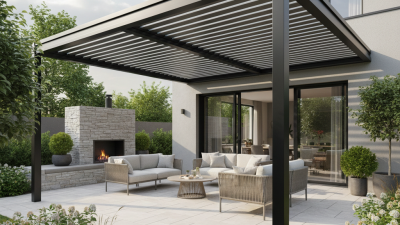
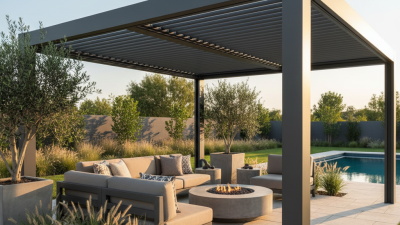
What is a Motorized Roof and How Does it Work?
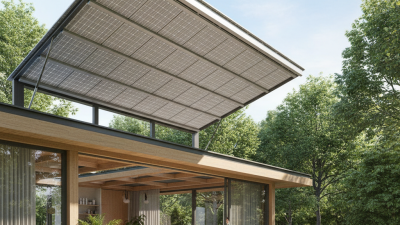
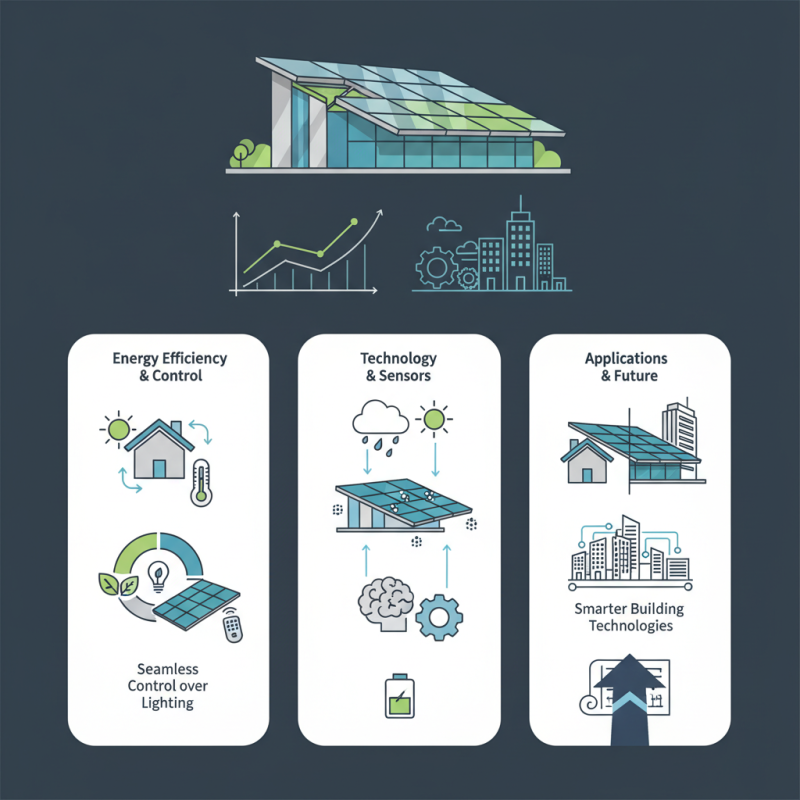
The Motorized Roof has gained significant traction in the architectural industry. A report by Research and Markets indicates that the global market for automated roofing systems is projected to grow at a CAGR of 15% over the next five years. This surge is attributed to increasing urbanization and the demand for innovative building solutions. The Motorized Roof enhances energy efficiency and provides seamless control over natural lighting.
These roofs are often equipped with sensors and can adjust based on weather conditions. They contribute to energy savings by reducing reliance on artificial lighting and climate control systems. This innovative feature does come with challenges. For instance, installation and maintenance require skilled professionals. Moreover, the upfront cost may deter some potential users.
Despite these hurdles, the Motorized Roof holds promise for both residential and commercial applications. As we move towards smarter building technologies, understanding how these systems work becomes critical. Embracing the benefits of Motorized Roofs could redefine our approach to architecture and sustainability.
What is a Motorized Roof?
A motorized roof is an innovative solution for enhancing the functionality of buildings.
It operates using a system of motors, sensors, and controls that automate the opening and closing of the roof.
This technology allows users to adjust the roof position depending on weather or light conditions.
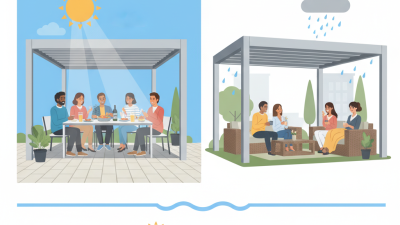
For example, during sunny days, the roof can fully open, allowing natural light to flood the space.
Conversely, on rainy days, the roof can quickly close, ensuring protection against the elements.
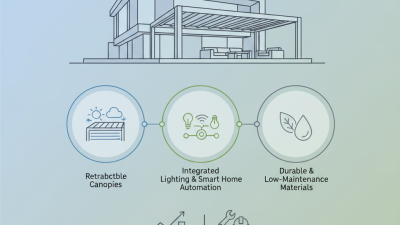
The components of a motorized roof include robust actuators and a reliable control interface.
Users can typically operate it through a remote control or a smart app, providing convenience.
However, installation requires professional expertise to ensure safety and proper functioning.
Defects may arise from improper installation, leading to malfunctions.
Regular maintenance is critical for longevity, but it can sometimes be overlooked.
Aesthetic appeal is another significant factor.
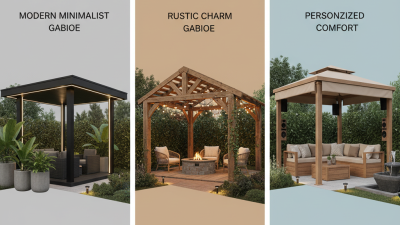
Motorized roofs come in various designs, enhancing the building's architectural value.
Yet potential buyers may find the initial investment daunting.
Weighing the costs against the benefits requires careful thought.
To truly enjoy the advantages of a motorized roof, one must engage deeply with the concept, understanding both its strengths and limitations.
Components of a Motorized Roof System
A motorized roof system consists of several key components that work together to create a functional and efficient structure. The primary elements include the motor unit, control mechanisms, and the roof panels themselves. The motor unit is responsible for the movement, typically utilizing electric or hydraulic systems. These motors ensure smooth operation, allowing for precise adjustments based on weather conditions or user preferences.
Control mechanisms can be manual or automated. Advanced systems often integrate sensors, enabling the roof to open or close in response to changing environmental factors. Industry reports highlight that automated control systems can improve energy efficiency by up to 30% in commercial spaces. The roof panels themselves can be made from various materials, such as glass or durable plastics, providing insulation and durability.
When considering a motorized roof, always check its specifications. Ensure the motor has sufficient torque for your roof's size and weight. Regular maintenance is essential. Wear and tear can lead to malfunctions.
Think about the location. Geographic elements can complicate installation. Wind loads and snow accumulation are critical factors. A motorized roof can be a beneficial addition, but understanding these components is crucial for effective operation.
How Motorized Roofs Operate: Mechanisms and Controls
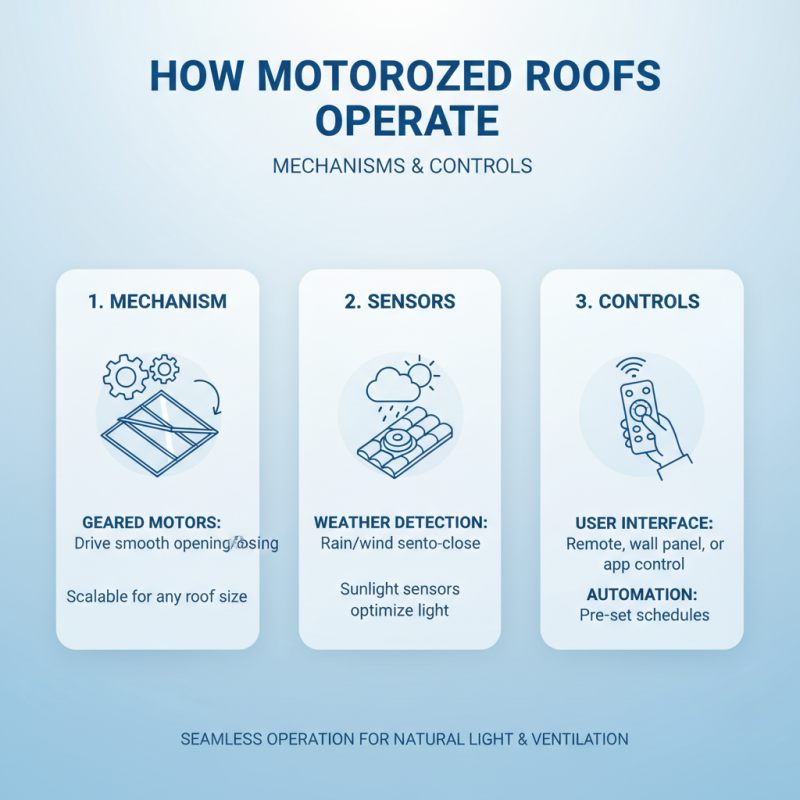
A motorized roof is an innovative solution for maximizing natural light and ventilation in a space. These roofs operate using a combination of motors, sensors, and controls, making operation seamless. The primary mechanism often involves geared motors that enable the roof to open and close smoothly, regardless of the size.
Control systems play a crucial role in automating a motorized roof. Many systems use remote controls or wall-mounted switches for easy access. Some advanced models integrate weather sensors. These sensors respond to rain or wind, ensuring the roof closes automatically when needed. However, reliance on technology can lead to challenges, such as sensor failure or motor malfunction.
Installation and maintenance require careful attention. A well-integrated motorized roof should align correctly to avoid leaking or jamming. Regular checks help ensure the motors function properly. Users should also be aware of potential issues, like electrical faults or debris blocking mechanisms. Balancing convenience with these maintenance needs can be difficult.
Applications of Motorized Roofs in Architecture
Motorized roofs are becoming increasingly popular in modern architecture. They offer unique applications that enhance both functionality and aesthetics. These roofs can open and close automatically, allowing natural light and ventilation into a space. This feature is especially beneficial in large venues like stadiums, auditoriums, and greenhouses. In residential designs, they can transform a simple living area into an indoor-outdoor space with just a push of a button.
In commercial architecture, motorized roofs provide remarkable flexibility. They can adapt to changing weather conditions. For instance, in a restaurant with a motorized roof, diners can enjoy the warmth of the sun or shield themselves from rain quickly. However, these systems can be complex and may require regular maintenance. Users should be aware of the potential for mechanical failures. The design must consider both the advantages and the challenges of installation.
Moreover, integrating motorized roofs into a building's design can be tricky. Architects need to ensure structural integrity while accommodating moving parts. The balance between aesthetic appeal and functionality is delicate. Not all designs fit every type of building. Careful planning and execution are essential to maximize their potential benefits.
What is a Motorized Roof and How Does it Work? - Applications of Motorized Roofs in Architecture
| Application |
Description |
Benefits |
Mechanism |
| Residential Homes |
Used to create flexible outdoor spaces, allowing for natural light and ventilation. |
Enhanced energy efficiency and comfort. |
Motorized opening via remote control or smart systems. |
| Commercial Buildings |
Facilitates natural light in large office spaces. |
Reduces artificial lighting costs, improves employee morale. |
Automated controls; can integrate with building management systems. |
| Sports Facilities |
Allows for variable environmental control during events. |
Flexible use of space; enhanced spectator experience. |
Motorized panel systems that open and close as needed. |
| Greenhouses |
Regulates temperature and humidity for plant health. |
Improved crop yields and reduced operational costs. |
Automated opening and closing driven by environmental sensors. |
| Public Spaces |
Creates flexible outdoor environments for events. |
Increases public engagement and multifunctional use of space. |
Motorized systems with manual and automated options for operation. |
Advantages and Maintenance of Motorized Roofs
Motorized roofs offer a versatile solution for modern architecture. These roofs can open and close automatically, providing enhanced airflow and natural light. One major advantage is energy efficiency. By allowing sunlight in, they can reduce the need for artificial lighting. They also improve indoor climate control, enhancing comfort for occupants.
Maintenance of motorized roofs is essential. Regular inspections ensure that all moving parts function smoothly. Over time, wear and tear can occur. Neglecting maintenance may lead to costly repairs or replacements. It's vital to check for debris accumulation as well. Simple cleaning tasks can extend the life of the system.
While motorized roofs bring numerous benefits, they are not without challenges. Initial installation costs may be high. Understanding the technology is crucial for effective usage. Users should not overlook the importance of professional help for maintenance. A lack of expertise can lead to improper handling, resulting in malfunctions. Balancing the advantages with thoughtful care can lead to a rewarding experience.