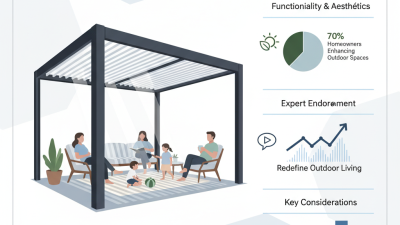
Choosing the best Pvc Awning Pergola is not only about appearance. It involves shade control, weather resistance, drainage, ventilation, and long-term maintenance. A pergola may look impressive in a showroom, yet perform poorly under strong wind or heavy rain. Small details matter. Very much.
Joe Raboine, an outdoor-living design specialist, has said, “Good outdoor design should feel like a natural extension of the home.” That principle applies to every Pvc Awning Pergola project. The structure should match the building, but it must also suit daily habits. Measure the patio carefully. Check where afternoon sunlight lands. Consider whether the awning opens smoothly beside doors, furniture, or lighting. A few centimeters can change usability.
This guide introduces seven practical tips for making a more confident choice. It examines frame quality, awning fabric, motor performance, drainage design, wind stability, installation requirements, and warranty support. Look for powder-coated aluminum, reinforced joints, UV-resistant fabric, and sealed electrical components. Ask how replacement parts are handled. Ask harder questions.
No product is perfect. Some models prioritize style over ventilation, while others sacrifice visual appeal for strength. That trade-off deserves honest attention. Local climate also changes the decision; coastal air, snow, and frequent storms can expose weak materials quickly. Before ordering, request technical drawings, load information, and maintenance instructions. A beautiful pergola should provide dependable comfort, not become another seasonal problem.
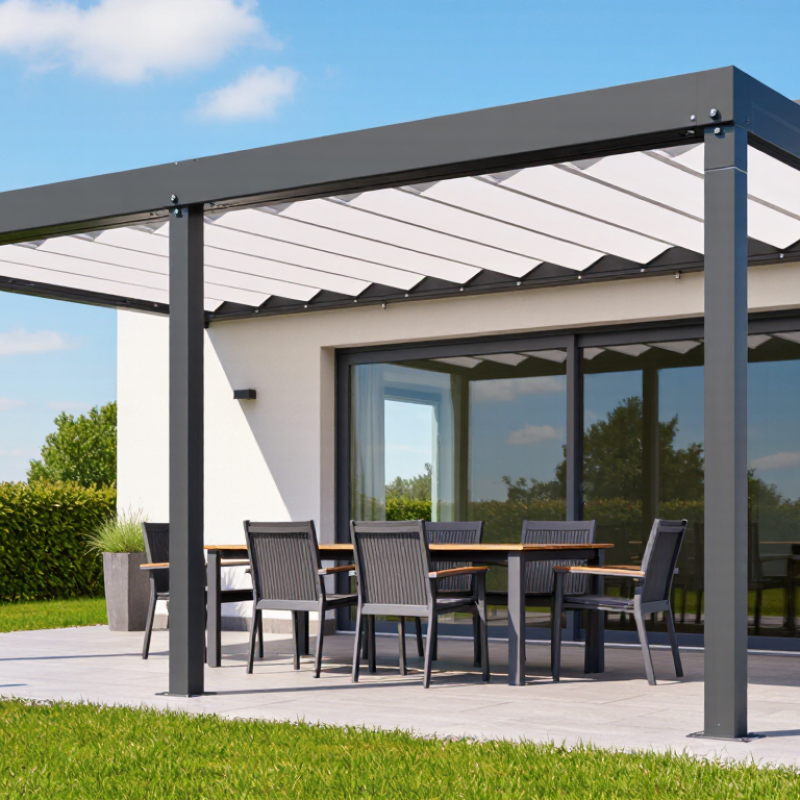
A PVC awning pergola is an outdoor structure with a roof made from polyvinyl chloride fabric or panels. It combines pergola support with adjustable weather protection. The awning blocks strong sunlight, limits light rain, and creates a cooler sitting area. Depending on the design, the cover may slide, fold, roll, or remain fixed. Many systems use aluminum or steel frames beneath the PVC material. Simple, but useful.
The roof usually works through tracks, hinges, cords, or a hand-operated crank. During installation, the awning needs a slight slope so rainwater can drain away instead of pooling. Pooling adds weight and may stretch the fabric. A sealed edge can reduce dripping, but it cannot replace proper drainage. I have seen poorly aligned tracks make opening difficult after only a few weeks. Check movement before accepting the installation.
When choosing one, inspect the PVC thickness, UV resistance, stitching, frame joints, and drainage design. Thicker material often feels stronger, but flexibility also matters in changing temperatures. Measure the available space carefully, including clearance for doors and nearby branches. Ask about wind limits and safe retraction conditions. A PVC awning is not a permanent shelter during severe weather. Cleaning usually requires mild soap, soft water, and gentle brushing. Harsh chemicals can weaken the surface. Look for clear maintenance instructions and accessible replacement parts. Real performance depends on installation.
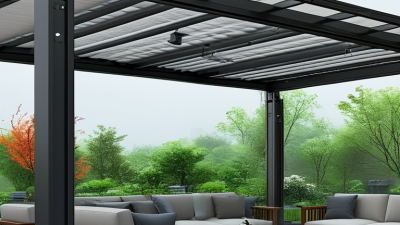
A PVC awning pergola combines a rigid support frame with a retractable or fixed PVC-coated fabric roof. When comparing options, check the material weight, tensile strength, light transmission, roof pitch, and drainage design. The ranges below are typical non-brand-specific specifications used as a practical screening guide; exact performance depends on construction, installation, climate, and testing methods.
Typical reference ranges: PVC-coated polyester fabric weight 450–650 g/m², tensile strength 2,000–3,000 N/5 cm, opaque fabric light transmission 0–15%, and recommended roof pitch 5–15°.
7 Tips for Choosing the Best PVC Awning Pergola?
How to Compare PVC Materials, Frames, and Weather Resistance
Choosing a PVC awning pergola starts with the roof sheet, not the color. PlasticsEurope’s Plastics—the Fast Facts 2023 report places PVC at roughly 10% of European plastics demand. That scale reflects mature processing, but it does not prove one membrane will survive your patio. Compare thickness, mass per square metre, tensile strength, tear strength, and UV stabilizer details. Ask for test documents, not cheerful promises.
ASTM G154 exposes samples to ultraviolet light and condensation cycles. It is useful for screening, not a lifetime guarantee. A pale, flexible sheet can still crack after repeated winter folding. Look for welded seams, sealed edges, drainage slope, and a stated temperature range. I have seen installers focus on fabric thickness while ignoring the seam. That shortcut fails.
Frames need equal scrutiny. Powder-coated aluminum is light and corrosion-resistant, while galvanized steel usually offers greater rigidity at greater weight. Check wall thickness, fastener grade, joint design, and coating salt-spray evidence. EN 13561 lists wind-resistance classes; Class 3 corresponds to 70 N/m² test pressure. Do not convert that figure casually into a universal wind-speed promise. Local codes, exposure, snow, and anchoring change the result. Compare the whole system. PVC alone is not the shelter.
A PVC awning pergola works best when its dimensions match your daily outdoor habits. Measure the patio, not just the table. Leave at least 60 centimeters for comfortable chair movement. For dining, allow space for pulled-out chairs and walking paths. For lounging, measure sofas, side tables, and opening doors. Small details matter.
A shade plan should follow the sun’s movement. Watch your patio in the morning and late afternoon. I once measured only the midday shadow, and the seating became hot before dinner. That mistake changed my approach. A rectangular pergola suits long patios and dining sets. A square shape often fits compact seating areas better. Curved layouts can soften narrow spaces, but they may reduce usable coverage.
Coverage should protect people, furniture, and nearby doors without making the area feel closed. Extend the awning beyond the seating zone, especially on the sun-facing side. Check the roof pitch and water runoff direction. PVC panels need secure support, suitable spacing, and careful drainage planning. Wind exposure also deserves attention. An oversized pergola can catch more wind than expected. Use local weather conditions and the installation guide when choosing the structure. Recheck every measurement. Nearly right is still wrong.
A comfortable PVC awning pergola needs more than an attractive roof. During outdoor consultations, I look for adjustable ventilation first. Openable roof sections release trapped heat while reducing glare on bright afternoons. A slight roof slope also helps rainwater drain away instead of collecting above the seating area. Small details matter.
Privacy depends on how the pergola meets its surroundings. Sliding PVC side panels can block direct views without making the space feel closed. Semi-transparent panels provide softer daylight than solid screens. Consider the sun’s direction, nearby windows, and evening lighting before selecting panel heights. A low screen may protect conversation areas, but it will not hide taller furniture.
Usability improves when controls are simple and reachable. Hand-operated systems can work well for smaller structures, while motorized options may help users with limited strength. However, convenience should not replace dependable construction. Check anchoring methods, frame strength, drainage access, and the manufacturer’s published wind guidance. Local installation requirements also deserve attention.
I once chose a very enclosed layout for a patio and later found it felt stuffy. My mistake was prioritizing privacy over airflow. A better design combines adjustable screens, shaded seating, and at least one open side. Add integrated lighting carefully, keeping fixtures protected from rain and positioned away from eye level. Comfort is personal, so test the space at different times before final installation.
Choosing a PVC awning pergola starts with a careful installation assessment. Measure the patio twice, including wall height, drainage paths, and door clearance. Ask the installer how posts will be anchored to concrete, timber, or masonry. Weak fixing points can cause movement during strong winds. The installer should also explain local permit requirements and load limits. Get these details in writing. A polished proposal is not enough.
Maintenance should be simple, but not ignored. Inspect seams, brackets, and drainage channels every few months. Remove leaves before water collects near the frame. Use mild soap and a soft brush on the PVC surface. Avoid abrasive cleaners, which may dull or scratch the finish. I once underestimated how quickly coastal dust can build up. That small mistake made later cleaning harder. Your climate matters.
Read the warranty before paying a deposit. Check coverage periods for the PVC panels, frame, hardware, labor, and fading. Ask whether storm damage, poor cleaning, or unauthorized repairs are excluded. A verbal promise has little practical value. Compare the full cost, not only the purchase price. Include delivery, foundation work, installation, maintenance, and possible replacement parts. Request an itemized quote with payment stages and completion dates. The cheapest option may require more repairs later, although a higher price does not automatically prove better quality. A realistic budget leaves room for drainage improvements and unexpected site work.
| Tip | Evaluation Area | What to Evaluate | Practical Facts and Recommended Standards | Typical Cost Impact | Buyer’s Checklist |
|---|---|---|---|---|---|
| 1 | Confirm the Intended Use | Size, location, weather exposure, and frequency of use | Choose a structure designed for the local climate. Coastal areas may require corrosion-resistant hardware, while regions with snow or strong winds need verified load ratings and suitable anchoring. | Low to high | Record the required width, projection, clearance, wind exposure, snow conditions, and drainage direction. |
| 2 | Assess Installation Requirements | Foundation, wall condition, anchoring, and installer qualifications | A pergola should be installed on a stable, level base. Masonry, concrete, timber, and other substrates require different fasteners. Incorrect anchoring can cause movement, water leaks, or structural failure. | Moderate to high | Ask whether ground preparation, permits, electrical work, removal of an old structure, or drainage modifications are included. |
| 3 | Examine PVC Material Quality | PVC formulation, UV resistance, thickness, seams, and frame compatibility | Outdoor PVC should be formulated for UV exposure and temperature changes. Look for reinforced seams, secure edge treatment, and a frame designed to support the covering without excessive sagging. | Moderate | Request material specifications, cleaning instructions, UV-resistance information, and details about replacement panels or components. |
| 4 | Evaluate Weather Performance | Wind, rain, snow, drainage, and ventilation performance | A pitched roof and properly designed gutters help direct rainwater away from entrances. Open sides or adjustable ventilation can reduce heat buildup. Do not assume a PVC cover is automatically suitable for heavy snow or extreme wind. | Moderate to high | Verify tested or stated wind and snow limits, water-management features, emergency operating procedures, and seasonal removal requirements. |
| 5 | Plan Maintenance and Cleaning | Cleaning frequency, access, mold prevention, and part replacement | Routine cleaning with mild soap and water helps remove dirt and organic buildup. Abrasive cleaners, solvents, and high-pressure washing may damage PVC surfaces or seams. Moving parts should be inspected periodically. | Low to moderate | Confirm how to clean the cover, inspect fasteners, remove leaves, treat mildew, lubricate hardware, and replace damaged sections. |
| 6 | Compare Warranty Coverage | Coverage period, exclusions, labor, color fading, and claims process | Warranty terms often differ between the PVC cover, frame, hardware, motor, and installation labor. Damage from storms, improper cleaning, unauthorized modifications, or normal wear may be excluded. | Indirect | Obtain the written warranty and verify start date, registration requirements, geographic limits, transferability, response time, and who pays shipping or labor. |
| 7 | Calculate the Full Installed Cost | Product price, installation, site work, accessories, maintenance, and replacement costs | The lowest purchase price may not be the lowest long-term cost. Compare equivalent sizes and specifications, including delivery, permits, foundations, lighting, screens, gutters, controls, and future PVC panel replacement. | Varies widely | Request an itemized quotation with taxes, delivery, installation, exclusions, payment terms, estimated completion time, and post-installation service. |